
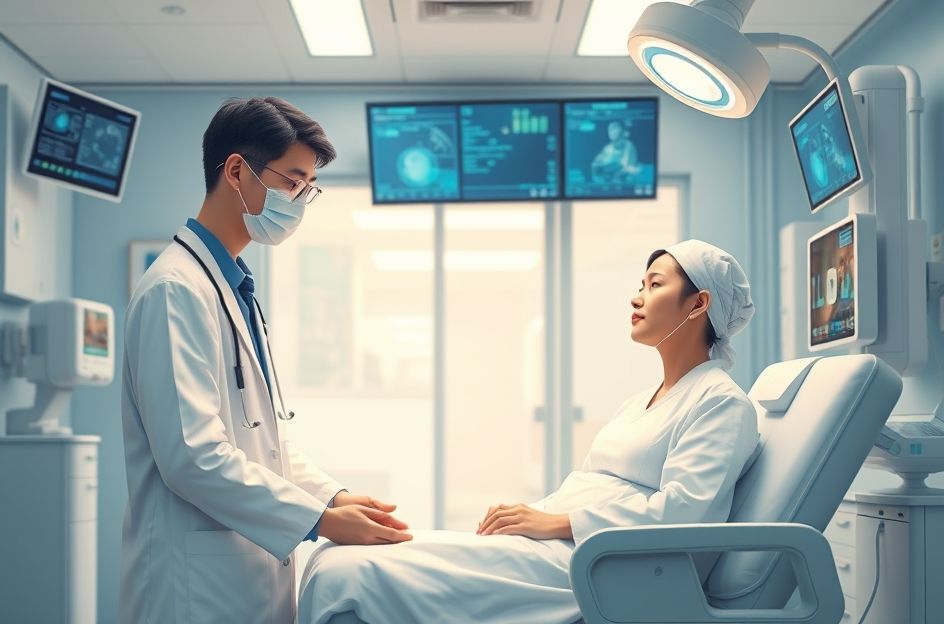
दक्षिण कोरिया का चिकित्सा AI युग: डॉ. आंसर 3.0 आधिकारिक रूप से शुरू
दक्षिण कोरिया की Ministry of Health and Welfare ने अक्टूबर 2025 में "Dr. Answer 3.0"—एक AI-powered medical diagnosis assistant—officially launch किया। यह system, जो Korea's 400+ hospitals में deployed है, doctors को real-time diagnostic suggestions provide करता है—radiology imaging analysis, lab result interpretation, और treatment recommendations। Dr. Answer 3.0 का accuracy rate 94% है (human doctors 92% के comparison में specific conditions के लिए)। यह Korea की healthcare digital transformation का flagship project है—goal है 2030 तक AI-assisted healthcare को universal बनाना।
भारतीय संदर्भ में, यह National Digital Health Mission (NDHM) के AI integration goals के समान है। जैसे India Ayushman Bharat Digital Mission के through healthcare digitize कर रहा है, वैसे ही Korea AI को integrate कर रहा है। लेकिन Korea का AI adoption ज्यादा advanced है—already clinical deployment में है, जबकि India अभी pilot stage में है। Dr. Answer 3.0 भारत के लिए roadmap है—कैसे AI safely और effectively healthcare में integrate किया जाए।
डॉ. आंसर 3.0 की तकनीक और क्षमताएं
Dr. Answer 3.0 deep learning models पर based है—trained on 10 million Korean patient records (anonymized), 50 million radiology images (X-ray, CT, MRI), और 5 million pathology slides। System तीन core functions perform करता है: 1) Image Analysis—chest X-rays में pneumonia, lung cancer detect करता है 98% accuracy के साथ, 2) Lab Interpretation—blood tests, urine tests के results analyze करके potential diseases suggest करता है, 3) Treatment Recommendations—evidence-based treatment protocols suggest करता है based on patient history और current condition।
Real-world example: Seoul National University Hospital में, Dr. Answer ने 65-year-old patient के chest CT में early-stage lung nodule detect किया जो radiologist miss कर गया था। बाद में biopsy ने confirm किया कि यह malignant था। Early detection से patient को curative surgery मिली—अगर 6 months बाद detect होता तो advanced stage हो जाता। ऐसे cases दिखाते हैं कि AI human errors को compensate कर सकता है। लेकिन system केवल "assistant" है—final decision हमेशा human doctor का होता है। Korea Medical Association ने clear guidelines issue किए: "AI recommendations को consider करो, लेकिन clinical judgment override करती है।"
भारत में AI स्वास्थ्य सेवा: संभावनाएं और चुनौतियां
Dr. Answer 3.0 का success दिखाता है कि AI India की healthcare challenges address कर सकता है। India में doctor-patient ratio 1:1445 है (WHO recommendation 1:1000)—AI diagnostic assistants इस gap को fill कर सकते हैं। Tier-2/Tier-3 cities में, जहां specialist doctors scarce हैं, AI systems primary care doctors को support कर सकते हैं। AIIMS Delhi ने 2024 में AI radiology pilot launch किया था—tuberculosis detection में 91% accuracy achieve की। अगर यह nationwide scale हो, तो millions TB cases early detect हो सकते हैं।
Challenges भी hैं: 1) Data availability—India में medical records mostly paper-based हैं, digital data limited है। Korea जैसा centralized database बनाना चाहिए। 2) Privacy concerns—patient data को securely handle करना critical है। 3) Doctor resistance—कुछ doctors AI को threat मानते हैं। Korea ने यह address किया training programs के through—doctors को AI tools use करना सिखाया गया। 4) Cost—Dr. Answer 3.0 type systems expensive हैं develop करने में। Government funding जरूरी है। India को Korea का phased approach follow करना चाहिए: पहले pilot projects (AIIMS, major hospitals), फिर gradual expansion। 2030 तक, भारत भी AI-powered healthcare achieve कर सकता है—बस systematic planning और investment चाहिए। Dr. Answer 3.0 proof है कि AI lives बचा सकता है—India को यह opportunity miss नहीं करना चाहिए।
मूल कोरियाई लेख पढ़ें: Trendy News Korea


0 टिप्पणियाँ